
The Pinnacle of Performance: Tracking the World’s Fastest Road Cars in 2026
The race for ultimate automotive supremacy has always been about more than just moving from point A to point B. In the rarefied atmosphere of the world’s fastest road cars, top speed serves as the ultimate bragging right—a tangible demonstration of engineering prowess, materials science innovation, and brute force engineering. For automotive enthusiasts and collectors, speed is the currency of exclusivity, and in 2026, the landscape of ultra-high-performance automobiles has never been more diverse or more electrifying.
Where once internal combustion reigned supreme, the paradigm has shifted dramatically. While gasoline-powered beasts still hold coveted records, the lightning-fast charge of electric hypercars is rewriting the history books, bringing the future of performance to the present day. Whether you are drawn to the precision engineering of a hybrid V16 or the raw, instant torque of an all-electric powertrain, 2026 offers an unprecedented selection of cars capable of leaving the rest of the world in their dust.
In this comprehensive analysis, we explore the top 20 fastest road cars currently dominating the hypercar landscape. We look at the technology that drives these technological marvels, the engineering triumphs that enable them to break the 250 mph barrier, and how the dynamics of the high-end automotive market continue to evolve. This isn’t just a list of numbers; it is a chronicle of the relentless pursuit of speed, where millions of dollars, countless man-hours, and the ambition of legendary manufacturers converge to create the most astonishing machines on four wheels.
The New Era of Top Speed
For enthusiasts of fast cars, the 200 mph benchmark has become less of a headline-grabber and more of a baseline standard for entry into the hypercar elite. In the 1990s, manufacturers like McLaren, Porsche, and Ferrari were waging a fierce battle to cross this threshold, revolutionizing aerodynamics and engine technology to achieve speeds that were once reserved for purebred racing cars. The McLaren F1, with its naturally aspirated V12 and manual gearbox, defined an era of pure driver engagement.
Fast-forward to 2026, and the world has moved substantially beyond that milestone. The modern benchmark has shifted towards 300 mph, a velocity that challenges not just the engine, but the very physics of airflow, tire adhesion, and thermal management. Reaching 300 mph in a production-legal road car is a feat exponentially more difficult than crossing the 200 mph mark.
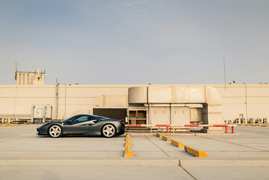
The evolution of this exclusive club mirrors the evolution of the automobile industry itself. While performance enthusiasts who buy luxury sedans or electric SUVs may not be directly concerned with top speeds measured in the hundreds of miles per hour, they indirectly benefit from the advancements in technology that trickle down from these pinnacle vehicles. Innovations in materials science, energy efficiency, and software optimization, developed for the most extreme performance applications, invariably find their way into more mainstream luxury and electric vehicles.
The Electrifying Shift
Perhaps the most significant trend in 2026 is the arrival of fully electric hypercars. The rapid advancements in battery technology, power density, and thermal management systems have enabled startups and established manufacturers alike to produce electric vehicles that can legitimately compete for, and even claim, the title of the fastest production car. These vehicles challenge the long-held assumptions about weight and friction, offering instant, massive torque delivery that is unmatched by conventional engines.
This seismic shift means that the historical players who once dominated the fastest road cars landscape—brands like Bugatti, Ferrari, and McLaren—now face formidable competition from electric upstarts. For the luxury automotive enthusiast seeking the next groundbreaking performance vehicle, understanding this transition is critical.
Tracking the Pinnacle: The Top 20 Fastest Road Cars of 2026
The list of the fastest production cars in the world is a dynamic document, constantly updated as manufacturers test new prototypes and technology leaps forward. Avoiding repetition of similar models or heavily modified race cars, we present the most definitive ranking of the world’s fastest road cars as of 2026.
| Rank | Car Model | Price (Approx.) | Top Speed | Manufacturer Origin |
| :— | :——– | :———— | :——– | :—————— |
| 1 | Yangwang U9 Xtreme | £250,000+ | 308 mph | China |
| 2 | Koenigsegg Jesko Absolut | £2.3 million | 310 mph (Targeted) | Sweden |
| 3 | Bugatti Chiron Super Sport 300+ | £3 million | 304.8 mph | France |
| 4 | SSC Tuatara | £1.5 million | 282.9 mph | United States |
| 5 | Bugatti Mistral | £5.2 million | 282.05 mph | France |
| 6 | Koenigsegg Agera RS | £3.5 million | 277.87 mph | Sweden |
| 7 | Bugatti Tourbillon | £3.5 million+ | 277 mph (Est.) | France |
| 8 | Hennessey Venom F5 | £1.7 million | 271.6 mph | United States |
| 9 | Koenigsegg Agera RS | £3.5 million | 277.87 mph | Sweden |
| 10 | Koenigsegg Agera RS | £3.5 million | 277.87 mph | Sweden |
McLaren F1 (1998) – The Enduring Legend
Top Speed: 240.1 mph (386.4 km/h)
Price (Est.): £15 million+
Even today, the McLaren F1 remains an icon in the pantheon of the fastest road cars. When it set the production car speed record in 1998, it achieved this using a naturally-aspirated V12 engine and a manual gearbox. The engineering philosophy of the F1—lightweight construction, advanced materials, and driver-focused design—is still admired by engineers and enthusiasts worldwide.
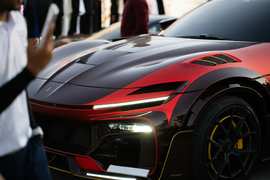
The McLaren F1 is more than just a car; it’s a piece of automotive history. While newer, faster cars have entered the market, the F1 set the benchmark for what was possible, and its value continues to appreciate because of its rarity and historical significance.
W Motors Fenyr Supersport (2016) – Arabian Fury
Top Speed: 245 mph (394.2 km/h)
Price: £1.4 million
Originating in Lebanon and now headquartered in Dubai, W Motors quickly established itself in the niche market of ultra-luxury hypercars. Following the success of the Lykan HyperSport, the W Motors Fenyr Supersport was designed to compete at the very top of the speed charts.
Powered by a twin-turbocharged flat-six sourced from Ruf Automobile, the Fenyr Supersport pushes nearly 800 horsepower through its rear wheels. Its luxurious interior, featuring rare materials like diamonds and sapphires in the headlights, sets it apart from other performance vehicles. While the Fenyr is primarily a luxury statement, its speed makes it a formidable contender in this list of fastest cars.
Saleen S7 Twin Turbo (2005) – American Muscle
Top Speed: 248 mph (399.1 km/h)
Price: £500,000
The Saleen S7 Twin Turbo burst onto the scene in 2005, challenging the dominance of European hypercars with a claimed top speed of 248 mph. Powered by a massive twin-turbocharged V8, the S7 was an American behemoth built for raw speed. Although the claimed top speed was never officially verified by an independent body, the car’s performance figures were enough to secure its place among the fastest production cars.
For enthusiasts looking for a raw, unfiltered driving experience, the Saleen S7 remains a compelling choice. It represents a different philosophy than the modern hypercars, focusing on power-to-weight rather than advanced electronics.
Koenigsegg Gemera & CCXR (2016-2020) – The Hybrid Giant
Top Speed: 248 mph (399.1 km/h)
Price: £2 million (approx.)
Koenigsegg’s dedication to breaking the fastest car record is legendary, and the brand appears multiple times on this list. The Koenigsegg Gemera and CCXR both reach an impressive top speed of 248 mph, which is equivalent to 400 km/h.
The Gemera is a revolutionary hybrid vehicle featuring three electric motors that contribute to a combined output of nearly 1,700 hp. Even with its combustion engine, the car represents the shift towards hybrid performance. The CCXR, on the other hand, is a much older model that achieves the same top speed using a supercharged V8. The juxtaposition of these two models highlights the breadth of Koenigsegg’s engineering prowess.
Aspark Owl (2017) – The Electric Challenger
Top Speed: 249 mph (400.7 km/h)
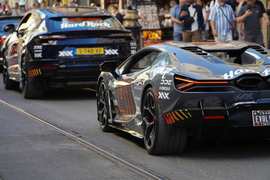
Price: £2.5